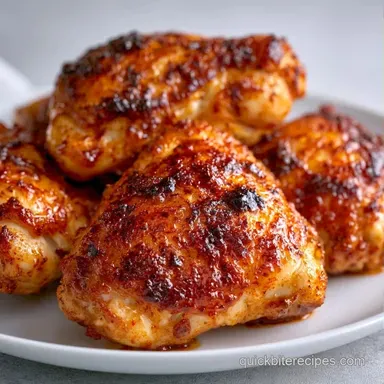
Oven Roasted Chicken Thighs: Ultra Crispy

- Time:10 minutes active + 40 minutes roasting = Total 60 minutes
- Flavor/Texture Hook: Deep mahogany skin with velvety, tender meat
- Perfect for: Budget-friendly weeknight dinners or easy Sunday roasts
The first thing you'll notice is that aggressive sizzle the moment the tray hits the oven. I remember a rainy Tuesday a few years back when I was trying to feed a crowd on a shoestring budget. I had a pack of cheap thighs and some wilting carrots in the fridge.
I was tired, but I wanted something that felt like a "real" meal, not just another quick stir fry.
I spent way too long overthinking the seasoning, but the real win happened when I finally stopped crowding the pan. I used to jam everything together, which just steamed the meat into a grey, rubbery mess.
Once I gave the chicken room to breathe, the skin transformed into this crackling, gold brown crust that literally sounds like parchment paper when you cut into it.
This version of oven roasted Chicken Thighs is all about that balance of high heat and patience. You're getting a full meal, including the veg, on one single tray. It's the kind of dish that makes your whole house smell like a professional bistro without you actually having to spend a fortune or spend hours scrubbing pots.
Oven roasted Chicken Thighs Guide
Right then, let's get into how we make this happen. The goal here isn't just "cooked" chicken, it's a specific texture. We want the skin to be so crisp it almost breaks, while the meat stays succulent.
By roasting the chicken directly on top of the potatoes and carrots, the vegetables essentially confit in the chicken fat as it renders.
It's a budget smart move because we're using the most flavorful, affordable cut of the bird. You don't need expensive salts or fancy oils. Just some basic pantry staples and a bit of heat. If you're looking for something even simpler, you can always check out my easy baked chicken guide, but this one pan roast is the gold standard for comfort.
Trust me on this, the resting period is where most people mess up. If you carve into that meat the second it leaves the oven, all those savory juices will run across the board, leaving the chicken dry. Give it ten minutes. It's the hardest part of the recipe, but it's the difference between "okay" and "incredible."
Why This Meal Works
I used to think the secret was the rub, but it's actually about how the heat interacts with the fat and the bone.
- over High heat Rendering: 218°C forces the fat under the skin to melt quickly, which fries the skin from the inside out.
- The Bone Buffer: Keeping the bone in acts as a heat shield, preventing the meat from overcooking before the skin gets that mahogany color.
- Vegetable Bedding: The potatoes and carrots act as a rack, lifting the chicken so air can circulate under the meat.
- Dry Surface: Removing surface moisture means the oven spends its energy browning the skin instead of evaporating water.
Let's look at how this compares to other methods. I've tried everything from slow cookers to pan searing, but for a family meal, the oven wins.
| Method | Total Time | Texture | Best For |
|---|---|---|---|
| Oven Roast | 60 minutes | Shatter crisp skin | Hands off family meals |
| Stovetop | 30 minutes | Seared crust | Quick individual portions |
| Slow Cooker | 6 hours | Fall apart tender | Shredded meat/stews |
This setup is the most efficient way to get a "roast dinner" feel without the stress of managing a whole bird.
The Flavor Components
Before we dive into the list, let's talk about what these ingredients are actually doing. It's not just about taste, it's about the reaction in the pan.
| Ingredient | Role | Pro Secret |
|---|---|---|
| Smoked Paprika | Color & Depth | Gives that "grilled" look without a BBQ |
| Olive Oil | Heat Conductor | Helps the spices stick and prevents sticking |
| Bone in Thighs | Moisture Source | Much harder to overcook than breasts |
| Kosher Salt | Moisture Draw | Pulls water out of the skin for better crisping |
I've found that using a coarser salt helps create little pockets of flavor rather than just a salty film. If you're on a tight budget, don't feel the need to buy the most expensive olive oil, but avoid "vegetable oil blends" if you want that fruity, rich undertone.
Your Kitchen Kit
You don't need a professional setup for this, but a few specific tools make it way easier. First, a heavy duty rimmed baking sheet is a must. If you use a flimsy one, it might warp in the 218°C heat, and your chicken fat will pool in the center, making some thighs soggy.
A digital meat thermometer is the only "fancy" tool I insist on. Relying on "clear juices" is a gamble. I want you to hit exactly 74°C in the thickest part of the thigh. Also, have a stack of paper towels ready. Seriously, you'll use more than you think to get that skin bone dry.
Finally, a small mixing bowl for the rub. You could just sprinkle the spices on, but mixing them with the oil first creates a paste that coats the chicken evenly, ensuring no "bald spots" on your roast.
The Cooking Process

Let's crack on. Follow these steps exactly, and you'll avoid the rubbery skin trap.
Prepping the Meat
- Pat the chicken thighs bone dry with paper towels. Note: Moisture is the enemy of crispiness.
- Combine 2 tbsp olive oil, 1 tsp kosher salt, 1/2 tsp cracked black pepper, 1 tsp garlic powder, and 1 tsp smoked paprika in a bowl.
- Rub the mixture thoroughly under and over the skin of the chicken. Note: Getting oil under the skin helps the meat stay velvety.
Setting the Base
- Toss 1 lb halved baby potatoes and 3 chopped carrots with 1 tbsp olive oil and 1/2 tsp dried thyme on a baking sheet.
- Place the chicken skin side up on top of the vegetables. Note: Ensure thighs aren't touching to allow air flow.
The over High heat Roast
- Roast at 425°F (218°C) for 40 minutes.
- Check the meat until the skin is deep mahogany brown and the internal temp hits 165°F (74°C). Note: Use a thermometer to avoid overcooking.
The Final Rest
- Remove from the oven and let the meat rest for 10 minutes. Note: This lets juices redistribute into the fibers.
Solving Common Issues
Even the best of us hit a snag. Usually, it comes down to moisture or overcrowding.
Rubbery, Pale Skin
If your skin isn't shattering, it's likely because the chicken was too wet when it went in, or the oven wasn't hot enough. According to Serious Eats, surface moisture creates steam, which prevents the fat from frying the skin.
Burnt Seasoning, Raw Center
This happens if your oven has a "hot spot" or if the thighs are uneven in size. Always place the largest thighs toward the back of the oven where it's typically hotter.
The Soggy Bottom
When vegetables are too crowded, they release water instead of roasting. This turns your potatoes into boiled spuds rather than roasted gold.
| Problem | Root Cause | Solution |
|---|---|---|
| Pale skin | Low temp or wet skin | Pat dry; check oven temp |
| Dry meat | Overcooked | Use thermometer; stop at 74°C |
| Mushy veg | Too many veggies | Use a larger tray; space them out |
- ✓ Pat skin bone dry with towels
- ✓ Use a rimmed baking sheet
- ✓ Don't let chicken thighs touch
- ✓ Rest for exactly 10 minutes
Creative Flavor Twists
Once you've got the base down, you can play with the flavors. This is where the budget smart approach really shines, as you can use whatever is in your spice cabinet.
For a Mediterranean vibe, swap the paprika for dried oregano and add some lemon slices under the chicken. If you want something with a bit more punch, try a honey soy glaze. Just brush it on during the last 10 minutes of roasting, otherwise, the sugar in the honey will burn and turn bitter.
If you're feeling fancy, you can try Baked Chicken Thighs recipe for a faster cook time, though you'll lose that crackling skin. Just remember to reduce the roasting time by about 10-15 minutes since there's no bone to slow down the heat.
| Original Ingredient | Substitute | Why It Works |
|---|---|---|
| Smoked Paprika | Cumin & Chili Powder | Similar earthiness. Note: Less "smoky" flavor |
| Baby Potatoes | Parsnips or Turnips | Similar roasting profile. Note: Sweeter, earthier taste |
| Dried Thyme | Rosemary or Sage | Classic poultry herbs. Note: Stronger, piney aroma |
The key is to keep the fat content similar so the vegetables still roast properly in the pan.
Storage and Waste
Don't let a single bit of this meal go to waste. Leftover oven roasted Chicken Thighs are actually better the next day in a sandwich or a wrap.
Store the chicken and vegetables in an airtight container in the fridge for up to 4 days. When reheating, avoid the microwave if you want to keep the skin crisp. Instead, pop them back in the oven at 180°C for about 10 minutes.
You can freeze the cooked meat for up to 3 months, though the skin won't be as crisp after thawing.
For zero waste, save the chicken bones! Throw them in a pot with water, an onion, and a carrot to make a quick bone broth. It's a free resource that adds huge depth to any future soup or risotto. Even the leftover pan drippings can be whisked with a bit of flour and water to make a quick gravy.
Top Pairing Ideas
Since the chicken and veg are already handled, you just need something to cut through the richness. A sharp, acidic side is the way to go.
A simple arugula salad with a lemon vinaigrette is a great contrast to the savory chicken. If you're looking for something heartier, my stuffed potatoes make for a decadent side, though that might be overkill for some.
For a lighter option, try some steamed green beans or roasted asparagus. The goal is to provide a fresh, "green" element to balance out the deep, roasted flavors of the meat and potatoes. Right then, you've got a full feast on one tray. Let's get cooking!
Recipe FAQs
Should I bake chicken thighs at 350 or 400?
Roast at 425°F (218°C). This higher heat is essential to achieve the deep mahogany brown skin and optimal crispiness described in the recipe.
How to bake chicken thighs in the oven?
Pat the meat bone-dry and rub with the oil and spice mixture. Roast at 425°F until a digital meat thermometer registers 165°F (74°C) in the thickest part of the thigh.
How to cook boneless and skinless chicken thighs in an oven?
Season the meat and roast at 425°F. Because they lack bone and skin, they cook significantly faster, so monitor the internal temperature closely to avoid overcooking.
Can a diabetic eat baked chicken?
Yes. Baked chicken is a high-protein, low-carbohydrate option that does not cause blood sugar spikes.
Are chicken thighs bad for LDL cholesterol?
No, but they are fattier than breasts. They contain more saturated fat, so you can lower the cholesterol impact by removing the skin before eating.
How to cook chicken when you have gastritis?
Omit the smoked paprika and cracked black pepper. Use only olive oil and salt to ensure the seasoning does not irritate the stomach lining.
What ideas for chicken thighs do you have?
Try them as a burger or in a mixed tray bake. If you enjoyed mastering the roasting technique here, see how the same principle works in our one pan chicken and veggies.
Crispy oven roasted Chicken Thighs