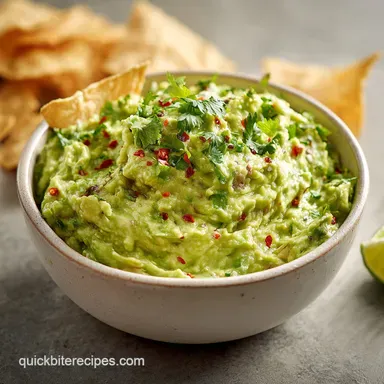
10 Minute Homemade Guacamole: Zesty and Creamy

- Time: Active 10 minutes, Passive 0 minutes, Total 10 minutes
- Flavor/Texture Hook: Zesty, creamy, and chunky
- Perfect for: Game day, quick taco nights, or beginner meal prep
- 10 Minute Homemade Guacamole Recipe with Cilantro and Lime
- The Secret to Releasing Maximum Flavor
- Vital Preparation Metrics and Yield
- Selecting Premium Fresh Ingredients
- Essential Kitchen Tools for Success
- Step-by-Step Texture and Flavor Layering
- Resolving Common Texture and Flavor Issues
- Creative Flavor Variations and Adjustments
- Optimal Storage and Freshness Preservation
- Perfect Pairing and Presentation Ideas
- Debunking Avocado Myths
- Recipe FAQs
- 📝 Recipe Card
10 Minute Homemade Guacamole Recipe with Cilantro and Lime
The second that knife slides through the pebbly, dark skin of a perfectly ripe Hass avocado, you know you’re in for something special. There’s a specific "thwack" sound when the blade hits the pit, followed by that satisfying twist that reveals the pale green, buttery interior.
I used to think great guacamole was just about mashing everything together in a bowl, but the real magic happens in the air, specifically, the citrusy mist that hits your face when you squeeze a fresh lime and the sharp, clean scent of chopped cilantro filling the kitchen.
Get ready to whip up the most vibrant and delicious 10 Minute Homemade Guacamole Recipe with Cilantro and Lime you've ever tasted.
Honestly, we’ve all been there, standing in the grocery store aisle, staring at those pre made tubs of graying dip and wondering if it’s worth the shortcut. It isn’t. Not even close.
This recipe is designed for those of us who want that restaurant quality brightness without spending half an hour in the kitchen. We’re going to focus on a method that maximizes flavor in minutes, using techniques that actually make a difference in how the ingredients interact on your tongue.
You can expect a dip that isn't just a mushy paste. We’re talking about a vibrant, textured masterpiece that balances the rich, healthy fats of the avocado with the sharp bite of white onion and the slow burn heat of a fresh jalapeño.
It’s the kind of dish that makes people hover around the snack table until the bowl is scraped clean. Let’s get into the "why" and "how" so you can nail this every single time.
The Secret to Releasing Maximum Flavor
- Aromatic Bruising: Pressing onions and salt together creates an abrasive force that ruptures cell walls, releasing essential oils that would otherwise stay trapped inside the vegetable pieces.
- Enzymatic Delay: The citric acid in the lime juice acts as a sacrificial lamb, reacting with oxygen so the enzymes in the avocado don't turn the dip brown immediately.
- Texture Contrast: Keeping 30% of the avocado in chunks provides a physical barrier for your taste buds, allowing you to experience the pure avocado flavor separately from the seasoned mash.
- Salt Solubility: Adding salt to the aromatics first allows it to dissolve in the vegetable juices, ensuring an even distribution of seasoning that a final sprinkle can't achieve.
| Method | Time | Texture | Best For |
|---|---|---|---|
| Traditional Bruised | 10 minutes | Perfect Chunky/Smooth | Authentic flavor & parties |
| Quick Mash | 5 minutes | Uniformly Smooth | Fast weeknight tacos |
| Food Processor | 3 minutes | Whipped/Velvety | Large crowds or toast spreads |
This comparison shows that while you can go faster, the manual bruising method is the sweet spot for that classic Mexican profile. If you are looking for more fast dinner ideas to pair with this, my Beef and Broccoli recipe is another great 20 minute win that keeps the kitchen stress low.
Vital Preparation Metrics and Yield
When you're aiming for that 10 minute mark, precision is your best friend. You don't want to be fumbling with scales once the avocados are open and the oxidation clock starts ticking. For this recipe, we are aiming for 5 generous servings.
Each serving is roughly a half cup, which is plenty for a few tacos or a healthy pile of tortilla chips.
Component Deep Dive
| Ingredient | Science Role | Pro Secret |
|---|---|---|
| Hass Avocado | Fat & Emulsion | Use "gentle pressure" test at the stem end for ripeness. |
| Lime Juice | pH Regulator | Roll the lime on the counter first to break internal membranes. |
| Sea Salt | Flavor Catalyst | Use flaky salt for better abrasion during the bruising step. |
| White Onion | Sharp Contrast | Rinse diced onions in cold water to remove the "sulfur" bite if sensitive. |
The key here is the Hass variety. Other avocados, like the larger, smooth skinned Florida types, have a much higher water content and lower fat. They’ll result in a watery dip that lacks that velvety mouthfeel we're after.
If you're doubling this for a party, remember that the lime juice doesn't just add flavor; it’s your primary defense against the dip looking like a science experiment gone wrong after thirty minutes on the table.
Selecting Premium Fresh Ingredients
Don't settle for "okay" produce here. Since there is no cooking involved, the quality of every single item is magnified. You want avocados that feel like a cold stick of butter when you press them, yielding but not squishy.
If they’re too hard, the flavor will be nutty and grassy rather than rich; if they’re too soft, they’ll taste slightly fermented.
- 3 large Hass avocados (approx. 600g): Pitted and peeled. Why this? They have the highest fat content for a silky texture.
- 1/2 small white onion (50g): Finely diced. Why this? White onions are crunchier and sharper than red or yellow versions.
- 1/2 cup fresh cilantro (15g): Finely chopped with tender stems. Why this? Stems hold massive flavor; don't throw them away!
- 2 tablespoons fresh lime juice (30ml): Freshly squeezed. Why this? Bottled juice has preservatives that dull the avocado's brightness.
- 1 medium jalapeño (15g): Finely minced. Why this? Provides a clean heat that cuts through the heavy fats.
- 1/2 teaspoon sea salt (3g): To taste. Why this? Enhances every other ingredient without adding a "chemical" saltiness.
- 1/4 teaspoon black pepper (1g): Freshly cracked. Why this? Adds a subtle earthy back note to the citrus.
- 1/2 cup Roma tomato (60g): Deseeded and diced. Why this? Adds sweetness and color without making the dip watery.
For the onion, if you find white onion too aggressive, you can swap it for red onion for a milder, sweeter finish. Just know it will change the color of the dip slightly. If you’re out of jalapeños, a pinch of serrano pepper works, but be careful, serranos can be up to five times hotter!
Essential Kitchen Tools for Success
You don't need a high end laboratory to make a 10 Minute Homemade Guacamole Recipe with Cilantro and Lime, but the right gear makes the "10 minute" part actually possible. I’ve made this in a camping bowl with a plastic spoon, and while it tasted fine, it lacked that professional finish.
A large, non reactive mixing bowl is non negotiable. Stainless steel or glass is perfect. Avoid unlined aluminum bowls, as the lime juice can react with the metal and give your guacamole a weird, metallic aftertaste. You’ll also need a sturdy fork or a potato masher.
I actually prefer a potato masher because the wires are spaced perfectly to give you those chunky bits we love.
Finally,, a sharp chef's knife is your best friend for the onion and jalapeño. If your knife is dull, you’ll end up crushing the onion instead of slicing it, which releases the compounds that make you cry and makes the onion taste "old." A clean, sharp dice keeps the flavor crisp.
Step-by-step Texture and Flavor Layering

- Prep the aromatics. Place the 50g of diced white onion, 15g of minced jalapeño, 15g of chopped cilantro, and 3g of sea salt into your bowl.
- Bruise the base. Use the back of a fork to press the mixture against the side of the bowl for 1 minute. Note: You’ll see the onion turn slightly translucent and smell a massive wave of fragrance.
- Add the acid. Pour the 30ml of lime juice over the bruised aromatics and stir once. Note: This creates a seasoned liquid that will coat every piece of avocado.
- Prep the fruit. Slice the 3 avocados in half, remove the pits, and scoop the flesh into the bowl.
- Master the mash. Using a fork or masher, crush the avocado until about 70% is smooth. Stop when you see distinct, penny sized chunks.
- Add the extras. Toss in the 60g of diced Roma tomatoes and 1g of black pepper.
- Fold gently. Use a spatula or spoon to fold the tomatoes into the mash. Do not over mix or you'll lose the chunky texture.
- Final taste. Grab a chip and try it. Add a tiny pinch more salt if the flavors don't "pop."
- Serve immediately. Transfer to a serving bowl and enjoy that 10 minute win.
Chef's Tip: If you want to go truly old school, use a stone molcajete for the bruising step. The rough volcanic rock is the ultimate tool for grinding those aromatics into a paste.
Resolving Common Texture and Flavor Issues
Even a simple dip can go sideways if the produce isn't cooperating. The most common heartbreak is "The Great Browning," which happens when the avocado's enzymes meet oxygen. If you aren't serving this the second it's made, you have to be tactical.
Another issue is the "Blandness Wall." Sometimes avocados are just less flavorful depending on the season. If you followed the recipe and it still feels like it's missing something, it's usually an acid or salt problem. A tiny extra squeeze of lime can wake up the whole bowl.
Quick Fix Guide
| Problem | Root Cause | Solution |
|---|---|---|
| Watery Dip | Tomato seeds/juice | Deseed tomatoes thoroughly or add them at the very last second. |
| Bitter Aftertaste | Over mashing the pith | Avoid scraping the dark green flesh too close to the skin. |
| Too Spicy | Jalapeño ribs/seeds | Remove the white inner ribs of the pepper before mincing. |
Common Mistakes Checklist
- ✓ Avoid the Blender: A blender turns guacamole into a baby food puree. Hand mashing is key for texture.
- ✓ Don't Skip the Bruising: Skipping step 2 means your onion and pepper will taste "raw" rather than integrated.
- ✓ Keep the Tomatoes Deseeded: The watery guts of a tomato will dilute the creaminess of your avocados.
- ✓ Season in Stages: Salt the aromatics first, then adjust at the end. It's easier to add than to subtract.
- ✓ Check Your Lime: If the lime is hard and dry, microwave it for 10 seconds to get the juice flowing.
Creative Flavor Variations and Adjustments
While the 10 Minute Homemade Guacamole Recipe with Cilantro and Lime is a classic for a reason, the budget smart cook knows how to pivot based on what's in the pantry. If you are looking to expand your dip game, you might also enjoy making a Homemade Hummus recipe which uses many of the same pantry staples like lemon and garlic.
The budget-friendly Swap
If limes are outrageously expensive (it happens!), you can use lemon juice. The flavor is slightly different, more floral and less "sharp", but it provides the necessary acidity to keep things green.
Also, if you hate cilantro (hello, soap tasting genes!), flat leaf parsley can provide the green flecks and freshness without the controversial flavor.
Texture and Heat Tweaks
- The Protein Boost: Stir in 1/4 cup of Greek yogurt. It makes the dip incredibly creamy and stretches the avocados further if you're on a tight budget.
- Tropical Heat: Swap the tomatoes for diced mango or pineapple. The sweetness pairs beautifully with the jalapeño.
- Garlic Lover's Version: Add one clove of garlic, turned into a paste with salt, during the bruising step.
| Original Ingredient | Substitute | Why It Works |
|---|---|---|
| Lime Juice (2 tbsp) | Lemon Juice (2 tbsp) | Provides similar acidity levels. Note: Flavor is slightly sweeter. |
| White Onion (50g) | Scallions (3-4) | Milder flavor. Great if you want a less "breath heavy" dip. |
| Jalapeño (15g) | Red Pepper Flakes (1/2 tsp) | Provides heat when fresh peppers aren't available. |
Optimal Storage and Freshness Preservation
Avocados are notoriously temperamental. To store leftovers, you have to eliminate the air. The best method I've found is the "Water Shield." Pack the guacamole tightly into a container, smoothing the top. Pour about half an inch of lukewarm water over the top to create an airtight seal.
When you’re ready to eat, just pour the water off and stir. It stays green for up to 24 hours this way!
In terms of the freezer, I'll be honest: don't freeze the finished guacamole. The tomatoes and onions will turn mushy and release water when they thaw, ruining that 70/30 texture we worked so hard for.
If you have extra avocados, mash them with just lime juice and freeze that—then add the fresh aromatics when you're ready to eat.
For a zero waste tip: don't toss the cilantro stems! They actually contain more concentrated flavor than the leaves. Chop them very finely and include them in the bruising step. Also, keep your avocado pits; while they don't actually stop browning (that's a myth), they look great as a garnish in the center of the bowl.
Perfect Pairing and Presentation Ideas
The way you serve your 10 Minute Homemade Guacamole Recipe with Cilantro and Lime can change the whole vibe of the meal. For a party, I love serving it in a chilled stone bowl. If you don't have one, pop your glass bowl in the freezer for 5 minutes before filling it.
This keeps the fat in the avocado stable and the flavors crisp while it sits out.
If you’re moving beyond just chips, try this as a base for "Guac Toast" with a poached egg on top. The richness of the yolk running into the zesty lime and cilantro is basically breakfast heaven. It also works as a fantastic cooling agent for spicy grilled shrimp or as a dollop inside a warm baked potato.
3 Bullet Decision Shortcut
- If you want it spicier, keep the jalapeño seeds in the mix or use a serrano pepper.
- If you want it creamier, mash 90% of the avocado and leave only a few tiny chunks.
- If you want it more "restaurant style", double the lime and salt for a higher flavor punch.
Debunking Avocado Myths
One of the biggest myths in the kitchen is that leaving the pit in the bowl prevents browning. Science tells us that browning is caused by oxidation. The pit only protects the small patch of guacamole directly underneath it.
To actually prevent browning, you need acid (lime juice) and a physical barrier (plastic wrap pressed directly onto the surface).
Another misconception is that you need to add oil to make it "shiny" or "richer." A Hass avocado is already nearly 15% fat by weight. Adding oil usually just makes the dip feel greasy on the palate and can cause the ingredients to separate. Stick to the natural fats of the fruit for that velvety, clean finish.
Finally,, don't worry about the "stringy" bits in some avocados. These are just vascular bundles; they are perfectly edible, though a quick mash usually makes them disappear into the texture.
By focusing on these small details, the bruising of the aromatics, the 70/30 mash, and the fresh lime, you are elevating a simple dip into a culinary highlight. It’s quick, it’s budget-friendly, and it’s undeniably better than anything you’ll find in a plastic tub.
Now, go grab those avocados and get mashing!
Recipe FAQs
How to prevent guacamole from turning brown?
Serve immediately to minimize oxidation. Since this recipe relies on fresh lime juice and hand-mashing, the best way to maintain vibrant color is to eat it right after preparation rather than letting it sit exposed to air.
Is it true I should use a blender for a smoother consistency?
No, this is a common misconception. A blender will turn your ingredients into a thin puree, destroying the essential chunky texture; instead, use a fork to mash 70% of the avocado while leaving 30% in distinct pieces.
How to get the most juice out of a lime?
Microwave the lime for 10 seconds before juicing. This simple technique softens the fruit, allowing you to extract every drop of the 2 tablespoons of juice needed for the recipe.
Why is it necessary to bruise the aromatics with a fork?
Pressing the onion, jalapeño, and cilantro against the bowl releases their essential oils and juices. If you enjoyed the flavor balancing technique used here, you can apply similar sensory principles when seasoning other fresh ingredients to ensure every bite is deeply aromatic.
Should I leave the seeds in the Roma tomatoes?
No, always remove the seeds and watery pulp before dicing. Including the liquid guts of the tomato will make your guacamole watery and dilute the rich, creamy texture of the avocados.
How to adjust the heat if the jalapeño is too spicy?
Remove all white membranes and seeds before mincing the jalapeño. Most of the capsaicin is concentrated in the membrane, so stripping it out before adding it to your aromatic base significantly reduces the bite.
Is it necessary to use white onion instead of red or yellow?
Yes, white onion is recommended for its sharp, clean bite. It provides the classic, crisp profile required for traditional guacamole, whereas yellow onions can be too pungent and red onions often leave a lingering aftertaste.
10 Minute Homemade Guacamole Recipe with Cilantro and Lime