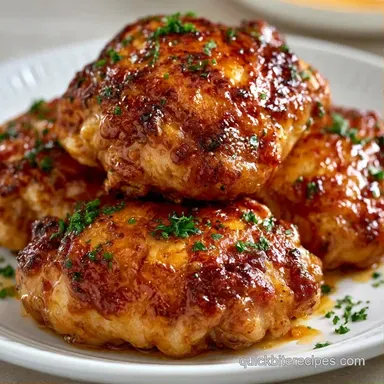
Crispy Baked Chicken Thighs: Juicy and Golden

- Time:15 minutes active + 40 minutes cooking = 65 minutes total
- Flavor/Texture Hook: Mahogany colored skin that shatters on impact with a velvety interior
- Perfect for: A stress free weeknight dinner or budget-friendly meal prep
Crispy Roasted Chicken Thighs
That first loud, aggressive sizzle when the meat hits the hot pan or the smell of smoked paprika filling the kitchen is what it's all about. I remember the first time I tried to host a "fancy" dinner and insisted on using chicken breasts.
I watched them like a hawk, but the second I overshot the time by three minutes, they turned into flavorless erasers. It was a total disaster.
Then I switched to these. I realized that the fat content in this cut is basically a safety net. You can't really overcook them in the same way, and the skin becomes this incredible, salty crackling. It changed how I look at budget cooking.
We're going for a mahogany finish here, not just "brown." This recipe delivers that heavy hitting, savory flavor without needing a dozen different pots. You'll get those juicy chicken thighs that feel like a restaurant meal but only take a few minutes of actual work.
The Secret to Golden Skin
I used to think the magic was in the marinade, but it's actually about moisture. If there's water on the skin, the oven has to evaporate that liquid before it can even start browning the meat. That's why you end up with rubbery skin that you just want to peel off and throw away.
- Surface Dryness
- Removing moisture allows the skin to fry in its own rendered fat immediately.
- Heat Circulation
- Using a rack lifts the meat, so hot air hits the bottom and sides, preventing a soggy base.
- Fat Binder
- A thin coat of oil helps the spices stick and conducts heat more evenly across the skin.
- Bone Insulation
- The bone acts as a heat shield, slowing down the cooking of the center to keep it succulent.
| Method | Total Time | Texture | Best For |
|---|---|---|---|
| Oven Roast | 65 minutes | Shatter crisp skin, juicy meat | Large batches/hands off |
| Air Fryer | 30 minutes | Extra crunchy, drier skin | 1-2 people / speed |
| Pan Sear | 25 minutes | Golden crust, very tender | Single servings / fast |
Right then, let's look at what's actually happening with the ingredients. It's not just about taste; it's about how they interact with the heat. If you're curious about how different cuts react, Serious Eats has some great deep dives on meat temperatures.
What Each Ingredient Does
| Ingredient | Science Role | Pro Secret |
|---|---|---|
| Kosher Salt | Moisture Draw | Draws out surface water for better crisping |
| Smoked Paprika | Color Agent | Gives that mahogany hue and a woody aroma |
| Olive Oil | Heat Conduit | Bridges the gap between spice and skin |
| Garlic Powder | Flavor Base | Doesn't burn as fast as fresh garlic at 425°F |
I've found that using the right salt makes a huge difference. Table salt is too fine and can make the skin taste metallic if you overdo it. Kosher salt has larger grains, which means it seasons more evenly without overwhelming the meat.
Getting Your Ingredients Ready
Keep it simple. We're using a budget-friendly list that packs a punch. Honestly, don't even bother with low-fat alternatives here; the fat is where the flavor lives.
- 2 lbs bone in, skin on chicken thighs Why this? Higher fat content prevents drying out
- 1 tbsp Kosher salt Why this? Better distribution than table salt
- 1 tsp black pepper Why this? Adds a sharp, earthy bite
- 1 tsp garlic powder Why this? Consistent flavor without burning
- 1 tsp smoked paprika Why this? Essential for the deep red color
- ½ tsp dried oregano Why this? Adds a subtle herbal note
- 1 tbsp extra virgin olive oil Why this? High smoke point and classic taste
| Original Ingredient | Substitute | Why It Works |
|---|---|---|
| Kosher Salt | Sea Salt | Similar mineral profile. Note: May be saltier; use slightly less |
| Smoked Paprika | Sweet Paprika | Adds color and mildness. Note: Loses the "fire roasted" depth |
| Olive Oil | Avocado Oil | Higher smoke point. Note: Neutral flavor, better for very high heat |
| Dried Oregano | Dried Thyme | Similar earthy profile. Note: Slightly more lemon like aroma |
If you're looking for more easy chicken thigh dinner recipes, I always suggest keeping a few of these staples in the pantry. It makes the whole process feel like a breeze.
Gear You'll Actually Need

You don't need a professional kitchen for this, but a couple of specific tools make it way better.
- Large Rimmed Baking Sheet: This catches all the drippings so your oven doesn't become a smoke machine.
- Wire Cooling Rack: This is the non negotiable part. It's the only way to get that 360 degree crisp.
- Digital Meat Thermometer: Stop guessing. Pulling the meat at exactly 175°F is the difference between "good" and "velvety."
- Paper Towels: You'll need a handful to get the skin bone dry.
How to Roast These Thighs
Let's crack on with the actual cooking. Trust me on the drying part; it's the most important step in the whole process.
- Pat the chicken thighs aggressively dry with paper towels to remove all surface moisture. Note: This prevents steaming
- Rub olive oil over the skin of the chicken to act as a binder for the seasoning.
- In a small bowl, combine Kosher salt, black pepper, garlic powder, smoked paprika, and dried oregano.
- Coat the chicken generously on all sides with the spice rub, ensuring some seasoning is tucked under the skin.
- Place the thighs on a wire cooling rack set over a large rimmed baking sheet for optimal airflow.
- Roast at 425°F (220°C) until the skin is mahogany colored and the internal temperature reaches 175°F (79°C) (about 40 minutes).
- Transfer the chicken to a plate and let it rest for 5-10 minutes to allow juices to redistribute.
Chef's Tip: For an even deeper flavor, try adding a pinch of espresso powder to your spice rub. It doesn't make it taste like coffee; it just makes the smokiness of the paprika pop.
Fixing Common Cooking Issues
Even the best of us hit a snag. Usually, it comes down to temperature or moisture. If you've ended up with meat that's a bit off, we can fix that.
Why Your Skin Is Rubbery
This usually happens because the oven wasn't hot enough or the skin was still damp when it went in. If the temperature is too low, the fat renders slowly, and the skin boils in its own juices instead of frying.
Why The Spices Burnt
High heat is great for skin, but if you use too much sugar in a rub (which we don't here, but some people do), it chars. If your paprika looks black, lower the oven by 10 degrees next time.
| Problem | Root Cause | Solution |
|---|---|---|
| Rubbery Skin | Surface moisture or low temp | Pat drier and ensure oven is preheated to 425°F |
| Dry Meat | Overcooked beyond 185°F | Use a thermometer; pull at 175°F |
| Pale Skin | Not enough oil or heat | Rub more oil on skin; check oven calibration |
Common Mistakes Checklist
- ✓ Patting the skin dry (don't just wipe it, press it)
- ✓ Using a rack instead of placing meat directly on the pan
- ✓ Checking the temperature in the thickest part of the thigh
- ✓ Resting the meat before slicing
- ✓ Avoiding the urge to peek and open the oven door every 5 minutes
Creative Ways to Change it
Once you've got the base down, you can take this in a dozen directions. These weeknight chicken thighs are a great canvas for different flavors.
Adding Hearty Potatoes
Toss some diced Yukon Gold potatoes in olive oil, salt, and pepper. Place them on the baking sheet under the wire rack. They'll roast in the chicken drippings, which is basically liquid gold. This makes the dish a full meal in one pan.
Shifting to Boneless Skinless
If you're using boneless skinless chicken thigh recipes, you'll need to reduce the cook time. Since there's no bone to insulate the meat and no skin to render, they'll cook in about 20-25 minutes. Just be careful not to overdo it, or they'll lose that velvety texture.
Creating a Honey Garlic Glaze
For something a bit sweeter, whisk together honey, soy sauce, and minced garlic. Brush this over the chicken during the last 5-10 minutes of roasting. The sugar in the honey will caramelize quickly, giving you a sticky, glossy finish.
If you want a side that cuts through the richness of the meat, I highly recommend my Kopytka with Mushroom Sauce. The creamy potatoes and earthy mushrooms are a match made in heaven.
Storage and Leftover Tips
Don't let a single scrap go to waste. These baked chicken thighs are actually better the next day if you reheat them right.
Fridge Storage: Keep them in an airtight container for up to 4 days.
Freezing: You can freeze cooked thighs for up to 3 months. Wrap them tightly in foil and then a freezer bag to prevent freezer burn.
Reheating: To keep the skin from getting soggy, avoid the microwave. Pop them back in the oven or an air fryer at 350°F (180°C) for 5-8 minutes. This brings back that shatter crisp texture.
Zero Waste: Save the bones! Put the leftover bones in a pot with water, a carrot, and an onion. Simmer for a few hours to make a quick, homemade stock for your next soup.
Best Sides for the Meal
Since the main event is so savory and rich, you want sides that provide a bit of contrast.
For a fresh hit, a crisp green salad with a lemon vinaigrette works wonders. The acidity cuts right through the fat of the chicken thighs. If you're in the mood for something more indulgent, a side of garlic mashed potatoes is the way to go.
If you're planning a bigger spread, you could serve these alongside some roasted asparagus or charred broccoli. For another chicken based idea for your meal prep, you might like these Star Chicken Thighs with Garlic, which use a slightly different flavor profile.
Ultimately, the beauty of this dish is its simplicity. Whether you're serving it as a simple weeknight chicken thighs dinner or making it a centerpiece for a family gathering, the result is always a winner. Just remember: keep it dry, keep it hot, and always let it rest. Happy cooking!
Recipe FAQs
Why are chicken thighs a better choice for weeknight dinners than breasts?
They are more forgiving and flavorful. The higher fat content ensures the meat remains juicy even if you leave them in the oven slightly too long.
How to get the crispiest skin possible?
Pat the chicken aggressively dry with paper towels. Removing all surface moisture prevents the skin from steaming and allows it to crisp quickly at 425°F.
Can heart patients eat chicken thighs?
Yes, in moderation. They are a nutrient-dense protein source, though those monitoring saturated fat intake may prefer skinless options.
How to cook boneless skinless thighs instead?
Reduce the roasting time. Because they lack bone and skin, these cook much faster; see our guide for baked boneless thighs for specific timing.
Is it true chicken thighs must be cooked to exactly 165°F?
No, this is a common misconception. While 165°F is the safety minimum, thighs have more connective tissue that breaks down best at an internal temperature of 175°F.
How to reheat leftovers without losing the crunch?
Use an oven or air fryer at 350°F. Heat for 5-8 minutes to restore the shatter-crisp texture, as microwaves will make the skin soggy.
How to prepare chicken thighs for roasting?
Rub with olive oil and a dry spice blend. Coat the meat in salt, pepper, garlic powder, smoked paprika, and oregano, making sure to season under the skin for maximum flavor.
Crispy Baked Chicken Thighs