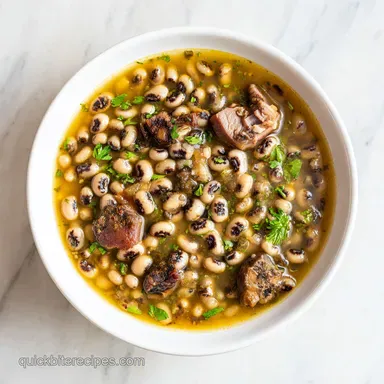
Southern Black Eyed Peas: Smoky and Savory

- Time: 10 min active + 45 min simmering = Total 55 mins
- Flavor/Texture Hook: Smoky, creamy peas in a thick, savory liquor
- Perfect for: New Year's Day traditions or a hearty weeknight side
The smell of smoked ham hocks hitting hot butter is a core memory for me. It's that heavy, salty aroma that fills the whole house and tells everyone that something comforting is happening on the stove.
I remember my grandmother insisting that the house had to smell like these peas before the clock struck midnight on New Year's Eve, otherwise, the luck for the coming year just wouldn't stick.
For a long time, I thought the secret was in how long you soaked them, but I realized it's actually about the balance of acidity and smoke. If you just boil them, you get bland mush. But when you hit them with a splash of vinegar at the end, the whole dish wakes up.
This black eyed peas recipe is exactly how I make them now - focused on high impact flavor without spending a fortune.
You can expect a dish that is thick, savory, and has just enough heat from the red pepper flakes to keep it interesting. It's a humble meal, but when done right, it feels like a hug in a bowl. Let's get into how to make this happen.
Best Southern Black Eyed Peas Recipe
Right then, let's talk about the "why" before the "how." When you're working with dried legumes, you're basically managing starch and collagen. Most people just throw everything in a pot and hope for the best, but there's a better way to handle it if you want that specific, velvety texture.
Collagen Breakdown: The ham hocks are full of connective tissue that melts into gelatin during the 45 minutes of simmering, thickening the liquid.
Starch Release: As the peas soften, they release natural starches into the broth, creating a creamy consistency without needing any dairy.
Acid Balance: Adding vinegar at the very end cuts through the heavy fat of the ham hock, brightening the overall profile.
Aromatic Base: Sautéing the onions in butter first creates a foundation of sweetness that balances the salty smoke of the meat.
Since we're going for a budget-friendly approach, using a Dutch oven is the smartest move. It holds heat evenly and prevents the bottom from scorching during the simmer.
| Method | Time | Texture | Best For |
|---|---|---|---|
| Stovetop | 55 mins | Velvety & Thick | Fresh, traditional meals |
| Oven | 2 hours | Very Soft/Slow cooked | Low maintenance batches |
| Pressure | 30 mins | Consistent & Tender | Last minute dinner |
The Essential Flavor Components
I've found that the quality of your broth can make or break this dish. While water works, chicken broth adds a layer of savory depth that you just can't replicate. If you're watching your budget, a basic bouillon is fine, but avoid the overly salty ones since the ham hocks already bring a lot of sodium.
According to Serious Eats, the way you handle dried beans can affect digestion and texture, and while some swear by long soaks, this specific black eyed peas recipe is designed for a quicker turnaround without sacrificing the bite.
| Ingredient | Science Role | Pro Secret |
|---|---|---|
| Ham Hocks | Flavor/Thickener | Look for "smoked" specifically for that campfire taste |
| Apple Cider Vinegar | pH Balancer | Always add at the end to keep the acidity bright |
| Smoked Paprika | Color/Earthiness | Use a Spanish pimentón for a deeper red hue |
| Black Eyed Peas | Main Protein | Rinse until the water runs clear to remove excess dust |
The Building Blocks
Stick to these measurements for the best results. Don't be tempted to skip the butter - it's what carries the flavor of the paprika and garlic into the peas.
- 1 lb dried black eyed peas, rinsed and sorted Why this? Holds shape better than navy beans
- 6 cups chicken broth Why this? Adds more depth than plain water
- 2 bay leaves Why this? Adds a subtle herbal background note
- 1 lb smoked ham hocks Why this? Essential for the smoky, salty base
- 1 large yellow onion, finely diced Why this? Provides necessary sweetness
- 3 cloves garlic, minced Why this? Adds a punchy aromatic layer
- 2 tbsp unsalted butter Why this? Better flavor than oil for sautéing
- 1 tsp smoked paprika Why this? Reinforces the smoke from the hocks
- 1/2 tsp crushed red pepper flakes Why this? Subtle back of-the throat heat
- 1 tsp salt Why this? Enhances all other flavors
- 1/2 tsp black pepper Why this? Basic earthy warmth
- 1 tbsp apple cider vinegar Why this? Cuts through the fat
- 1/4 cup fresh parsley, chopped Why this? Fresh finish to a heavy dish
If you're looking for a vegan black eyed peas recipe, you can swap the ham hocks for smoked tofu or a pinch of liquid smoke and a dash of soy sauce.
| Original Ingredient | Substitute | Why It Works |
|---|---|---|
| Ham Hocks (1 lb) | Smoked Paprika + Soy Sauce | Mimics smoke and salt. Note: Lacks the gelatinous thickness |
| Chicken Broth (6 cups) | Vegetable Broth (6 cups) | Similar salt profile. Note: Lighter overall flavor |
| Butter (2 tbsp) | Olive Oil (2 tbsp) | Provides fat for sautéing. Note: Lacks the creamy taste |
| Apple Cider Vinegar | Lemon Juice | Similar acidity. Note: Adds a citrusy note |
I usually keep a bag of dried peas in the pantry because they're so cheap and last forever. If you're using a canned black eyed peas recipe instead, just skip the simmering time and add the ingredients in a quick sauté before tossing the canned peas in for 10 minutes.
The Right Kitchen Gear
You don't need a fancy setup, but a heavy bottomed pot is non negotiable. A thin pot will create hot spots, and your peas will burn on the bottom before the centers are soft.
- Dutch Oven: This is the gold standard. The heavy lid keeps the moisture in, which is vital for this black eyed peas recipe.
- Fine Mesh Strainer: For rinsing the peas and getting rid of any small stones or debris.
- Wooden Spoon: Better than metal for scraping the bottom of the pot without scratching your enamel.
- Chef's Knife: For a consistent dice on those onions - bigger chunks don't melt into the sauce as well.
Chef's Tip: If you don't have a Dutch oven, a heavy stainless steel pot works, but keep the heat on the lowest possible setting to avoid scorching.
Step-by-step Cooking Guide

Now, let's get these moving. The goal here is to build layers of flavor. We don't just dump and boil - we sear and simmer.
- Melt the butter in a Dutch oven over medium heat. Add the diced onion and sauté until translucent and starting to brown at the edges (about 5 minutes).
- Stir in the minced garlic and smoked paprika, cooking for 60 seconds until the aroma fills the kitchen.
- Add the rinsed black eyed peas, ham hocks, and chicken broth. Bring the mixture to a rolling boil Note: High heat helps the peas start softening quickly.
- Immediately reduce heat to low. Cover with a lid and simmer gently for 45 minutes until the peas are tender but not disintegrating.
- Check the liquid level. If it looks too dry, add a splash more broth Note: You want a thick gravy, not a dry porridge.
- Remove the bay leaves and the ham hocks from the pot.
- Shred the meat from the bone using two forks. Stir the shredded ham back into the pot.
- Stir in the apple cider vinegar and red pepper flakes until well combined.
- Garnish with chopped fresh parsley. Serve while steaming hot.
Fixing Common Pot Problems
Even with a solid plan, legumes can be moody. The most common issue is the texture - either they're too hard or they've turned into a mash.
Why Your Peas Stay Hard
If your peas are still crunchy after 45 minutes, it's usually due to "hard water" (high mineral content) or the peas being too old. The minerals bind to the pectin in the pea walls, preventing them from softening.
Why the Broth is Too Thin
Sometimes the starch doesn't release fully, leaving you with a watery soup instead of a rich stew. This often happens if the heat was too high and the liquid evaporated too fast, or if you didn't use enough peas for the amount of broth.
Preventing Burnt Bottoms
The heavy starches in this black eyed peas recipe tend to sink and stick. If you smell something toasted, don't stir aggressively - you'll just mix the burnt bits into the rest of the dish.
| Problem | Root Cause | Solution |
|---|---|---|
| Peas are too mushy | Overcooked or too old | Simmer for 10 mins less next time |
| Broth is too salty | Ham hocks were overly cured | Stir in 1/2 cup of unsalted water or a pinch of sugar |
| Bitter taste | Burnt garlic in step 2 | Start over or add a tiny bit of honey to balance |
Common Mistakes Checklist:
- ✓ Did you rinse the peas? (Prevents grit and odd tastes)
- ✓ Did you reduce heat after the boil? (Prevents mushy peas)
- ✓ Did you add vinegar at the end? (Ensures the flavor pops)
- ✓ Did you remove the bay leaves? (They're for flavor, not eating)
Ways to Twist the Dish
Once you've mastered this basic black eyed peas recipe, you can start playing with the flavor profiles. This is where you make it your own based on what's in your fridge.
If you want a more "creamy" vibe, stir in a tablespoon of butter or a splash of heavy cream right before serving. For those who love a bit of a kick, swap the red pepper flakes for diced jalapeños during the onion sauté.
If you're in the mood for something different and legume based, you might enjoy an Easy Homemade Hummus recipe as a starter. Both dishes celebrate the versatility of beans, but while the peas are all about warmth and smoke, hummus brings a fresh, zesty contrast.
You can also turn this into a "black eyed pea soup" by simply doubling the chicken broth and adding diced carrots and celery to the aromatic base. It transforms from a side dish into a full, hearty meal.
For a slow cooker version, toss everything (except the vinegar and parsley) into the crockpot on low for 6-8 hours.
Make-ahead and Leftover Tips
One of the best things about this dish is that it actually tastes better the next day. The flavors have more time to meld, and the broth thickens even further as it cools.
Fridge Storage: Keep them in an airtight container for up to 5 days. The liquid will likely turn into a jelly like consistency - this is normal and is thanks to the collagen from the ham hocks.
Freezing: These freeze surprisingly well. Store them in freezer safe bags or containers for up to 3 months. When you thaw them, the texture might be slightly softer, but the flavor remains.
Reheating: Warm them on the stove over medium low heat. Add a splash of water or broth to loosen the liquid back up to a velvety consistency.
- - Ham Bone
- If you have leftover ham bone from a larger roast, use it instead of hocks.
- - Onion Scraps
- Save your onion skins and carrot ends in a freezer bag to make your own vegetable broth later.
- - Leftover Peas
- Mash the remaining peas into a patty with some breadcrumbs and an egg for a high protein breakfast cake.
Perfect Side Dish Pairings
Since this black eyed peas recipe is so rich and salty, you need sides that provide contrast. Think acidity, freshness, or a different kind of heartiness.
I love serving these with a side of collard greens simmered with a bit of cider vinegar. The bitterness of the greens cuts through the richness of the ham. A slice of toasted cornbread with honey butter is also a classic for a reason - it's the perfect vehicle for soaking up that liquid gold.
For something more unconventional but equally satisfying, try pairing this with Kopytka with Mushroom Sauce. The soft, pillowy potato dumplings and the earthy mushroom sauce complement the smokiness of the peas without competing for the spotlight.
If you're serving this for a crowd, a simple cabbage slaw with a lime vinaigrette provides the crunch and brightness needed to balance the plate.
Truths About Legumes
There are a few things people always say about peas that just aren't true. Let's clear the air.
"You must soak peas for 12 hours." Not true for black eyed peas. Their skins are thinner than chickpeas or kidney beans, so a quick rinse and a steady simmer are usually enough.
"Adding salt early makes beans tough." This is a common myth. While excessive salt in the soaking water can sometimes slow softening, adding it during the simmer actually helps the seasoning penetrate the core of the pea.
"Canned peas are the same as dried." Not even close. Canned peas are processed and often sit in a salty brine that alters their texture. Dried peas provide a much more authentic, nutty flavor and a better "bite."
This black eyed peas recipe is all about simplicity and patience. By focusing on the aromatics and giving the ham hocks time to break down, you get a dish that feels expensive but costs almost nothing. Trust the process, don't rush the simmer, and always remember that splash of vinegar at the end.
Now, go get that pot simmering!
Recipe FAQs
What's the best way to cook your black-eyed peas?
Simmer gently in a Dutch oven after searing aromatics. Sauté onions in butter, stir in garlic and paprika, then simmer with ham hocks and chicken broth for 45-60 minutes.
What seasonings are good on black-eyed peas?
Smoked paprika, bay leaves, and red pepper flakes. These ingredients create a smoky, herbal depth that complements the rich ham hocks and chicken broth.
What happens if you don't soak black-eyed peas before cooking?
They still cook perfectly fine. Because black-eyed peas are smaller and thinner than most dried beans, they don't require soaking to reach a tender consistency.
Are black-eyed beans good for diabetics?
Yes, they are generally a great choice. They provide a combination of fiber and protein that helps stabilize blood sugar levels.
Can I substitute the ham hocks for another protein?
Yes, any smoked pork will work. If you want a more substantial meal, these peas pair perfectly with steak bites.
How to prevent black-eyed peas from becoming mushy?
Reduce heat immediately to low after the initial boil. Simmer gently for 45-60 minutes and remove from heat once the peas are tender but still hold their shape.
Why add apple cider vinegar at the end?
The acidity cuts through the richness of the ham. Stirring it in just before serving brightens the overall flavor profile of the dish.
Black Eyed Peas Recipe with Ham Hocks