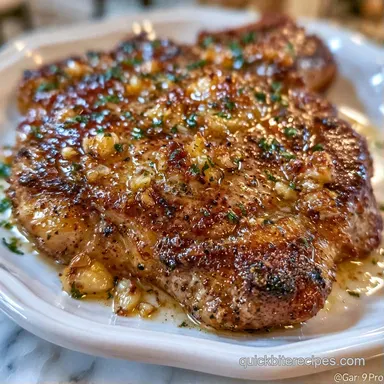
Quick Steak Dinner for Dad in 22 Minutes

- Time: 10 min active + 52 min tempering/resting
- Flavor/Texture Hook: Deep mahogany crust with a rich, garlic butter finish
- Perfect for: A high impact meal that feels fancy but takes very little effort
Quick Steak Dinner for Dad
That loud, aggressive sizzle the second the meat hits the cast iron is the only sound that matters here. I remember one Father's Day where I tried to be too careful, keeping the heat low so I wouldn't burn the steak. I ended up with two gray, rubbery slabs of meat that looked more like boiled beef than a treat.
It was a total letdown, and Dad was too polite to say it, but the lack of a crust was obvious.
You don't need a professional grill or a charcoal pit to get a restaurant style sear. Most people think the grill is the only way to go, but a heavy skillet actually gives you more control over the basting process.
This Quick Steak Dinner for Dad focuses on heat management and surface dryness to get a crust that actually cracks when you cut into it.
Expect a meal that feels like a celebration but doesn't keep you in the kitchen all night. We're using a few specific tricks, like tempering the meat and using a high smoke-point oil, to ensure the center stays juicy while the outside gets that dark, savory char.
Why the Crust Forms
Dry Surface: Water on the meat turns to steam, which blocks the browning process. Patting the steak dry ensures the heat hits the protein directly for a dark crust.
Butter Basting: Adding butter and herbs at the end creates a rich foam. Spooning this over the meat adds layers of flavor that you just can't get from seasoning alone.
| Method | Time | Texture | Best For |
|---|---|---|---|
| Stovetop | 12 mins | Thick crust, rich butter flavor | Individual steaks, high control |
| Oven | 25 mins | Even internal cook, lighter crust | Thick roasts, larger batches |
Choosing the Right Cuts
For this recipe, I use Ribeye because the internal fat renders down and bastes the meat from the inside. If you want something leaner, a New York Strip works, but you'll lose some of that buttery richness.
Avocado oil is a must here because it doesn't smoke or break down until it's incredibly hot. If you used extra virgin olive oil, it would burn and taste bitter long before the steak actually browned. For those looking for other simple steak dinner ideas, the key is always starting with a cut at least 1.5 inches thick so you can get a sear without overcooking the middle.
The Building Blocks
- 2 (340g) Ribeye steaks, 1.5 inches thick Why this? Rich marbling ensures maximum flavor.
- 15ml Avocado oil Why this? Remains stable at high temperatures.
- 15g Kosher salt Why this? Large crystals effectively pull out surface moisture.
- 2g Coarse black pepper Why this? Provides a bold, pungent kick.
- 42g Unsalted butter Why this? Used for a luscious, fragrant baste.
- 3 cloves (9g) Garlic, smashed Why this? Gives the butter a savory complexity.
- 2 sprigs (4g) Fresh rosemary Why this? Traditional, resinous steakhouse scent.
- 2 sprigs (4g) Fresh thyme Why this? Lends a mild, herbal quality.
| Original Ingredient | Substitute | Why It Works |
|---|---|---|
| Ribeye Steak | New York Strip | Lower fat content. Note: Less marbling, so baste more frequently |
| Avocado Oil | Grapeseed Oil | Similar heat tolerance. Note: Has a very neutral taste |
| Fresh Rosemary | Dried Rosemary | Potent flavor. Note: Use 1 tsp; less fragrant than fresh |
The Right Gear
For the best results, use a cast iron skillet. It retains heat much more effectively than stainless steel or non-stick, ensuring the temperature doesn't crash when the meat hits the surface.
Alternatively, a thick-bottomed stainless steel pan is a good substitute, though you'll need to be more aggressive with your heat.
Opt for metal tongs rather than a fork to avoid poking holes in the meat and losing those flavorful juices. To accurately track your target temperature without cutting into the steak and letting the heat escape, a simple meat thermometer is essential.
Step by step Searing

- Take the steaks out of the fridge 30 minutes before you cook. Note: This helps the center warm up for a more even cook.
- Use paper towels to pat every side of the meat completely dry. Note: Any remaining moisture will steam the meat rather than searing it.
- Season all surfaces and the thick edges with coarse black pepper and kosher salt.
- Place a cast iron skillet over high heat and add avocado oil. Wait until the oil shimmers and just begins to smoke.
- Lay the steaks in the pan, pressing down lightly. Cook for 3-4 minutes on each side to develop a dark, rich crust.
- Reduce heat to medium. Add the smashed garlic, rosemary, thyme, and unsalted butter.
- When the butter is foamy and smells nutty, tilt the pan. Spoon the flavored butter over the steaks continuously for 2-3 minutes.
- Remove the steaks from the skillet. Let them rest for 5-10 minutes before slicing. Note: This allows the juices to redistribute throughout the meat.
Fixing Common Steak Issues
Fixing Gray Meat
If your steak is gray rather than brown, it's likely due to low pan temperature or surface moisture. Your oil should be shimmering and on the verge of smoking before you add the meat. Next time, take an extra 30 seconds to pat the steaks dry with a paper towel.
Managing Excessive Smoke
A small amount of smoke is typical, but a cloud of smoke indicates the oil is burning. This happens if the heat is too intense for your chosen oil or if the butter was added too early. Introduce the butter only during the final few minutes, as it burns more quickly than avocado oil.
Adjusting Overcooked Centers
If the center is overdone, you may have forgotten to let it rest or cooked it too long over high heat. Use a meat thermometer to remove the steak 5 degrees before your goal temperature. Carryover heat will finish the cooking process while the meat rests on the board.
Swapping Ingredients
If you want to shift the flavor profile, try swapping the rosemary for fresh sage or adding a crushed juniper berry to the butter. For a leaner alternative, use a center cut filet mignon, though you'll need to increase the butter baste since the meat lacks internal marbling.
If you're planning a bigger event, this method works great for small batches, but for a larger group, you might want to check out my dinner for a crowd guide. For a different twist, you could add a dollop of compound butter on top of the resting steak for an even more indulgent finish.
Keeping Leftovers Fresh
Place leftover steak in an airtight dish and keep it refrigerated for up to 3 days. To stop the meat from drying out, slice it before storing and drizzle over some of the remaining pan butter.
To minimize waste, save those garlic skins and herb stems. Toss them into a freezer bag with other vegetable scraps to make a simple stock. Additionally, leftover steak is a wonderful addition to a breakfast hash or thinly sliced over a salad the next day.
Serving Your Steak
For the best experience, serve this steak on a warmed plate. If you use a cold plate, the bottom of the meat will chill too quickly, causing the fat to congeal.
Balance the richness of the ribeye with something vibrant. A light arugula salad with lemon vinaigrette or roasted asparagus are excellent choices. For a complete meal, a simple Father's Day dinner typically features a side of garlic mashed potatoes or a crusty baguette to enjoy with the leftover herb butter.
Chef Note: Always slice against the grain. Find the lines of the muscle fiber and cut perpendicular to them; this breaks up the tougher fibers and ensures every bite is tender.
Steakhouse Pairings
For a traditional feel, serve with a baked potato and creamed spinach. The earthy greens help balance the heavy fat of the ribeye.
Modern Bistro Pairings
For a lighter, more contemporary take on this Quick Steak Dinner for Dad, try serving the steak over a bed of sautéed kale with roasted heirloom carrots on the side.
Critical Sodium Level
3200 mg 3,200 mg of sodium per serving (139% 139% of daily value)
The American Heart Association recommends a daily sodium limit of no more than 2,300 mg for most adults to reduce the risk of cardiovascular disease.
Tips to Reduce Sodium
-
Slash the Salt-30%
Reduce the Kosher salt from 1 tablespoon to 1 teaspoon. This is the primary source of sodium in this recipe.
-
Use Acid for Flavor-15%
Squeeze fresh lemon juice over the steaks after resting. The acidity mimics the taste of salt and enhances the meat's natural flavor.
-
Strategic Seasoning-10%
Apply salt only to the exterior edges of the steak rather than a heavy coating across the entire surface.
-
Boost Aromatics
Increase the amount of fresh rosemary and thyme to add deeper savory notes without adding any sodium.
Recipe FAQs
What is the 3 3 3 3 rule for steaks?
It's a simplified timing mnemonic. In this recipe, we prioritize tempering the meat for 30 minutes and searing for 3-4 minutes per side to achieve a mahogany crust.
How do I get a restaurant-style crust?
Pat every side of the steak aggressively with paper towels to remove surface moisture. Then, use a high-heat cast iron skillet with avocado oil until it barely smokes before adding the meat.
Is it true that steaks must be cooked straight from the fridge?
This one's false: You should remove steaks from the fridge 30 minutes before cooking. This tempering process ensures the center warms up so the steak cooks evenly.
Which side dishes pair best with ribeye?
Serve with a chilled potato salad. A classic potato salad provides a cool, tangy contrast to the richness of the butter-basted ribeye.
Quick Steak Dinner for Dad for 2